
- Posted on
- • Finance
AI Memory Shortage Driving Electronics Prices Up 200%
- Author
-
-

- User
- iamhamzatahir
- Posts by this author
- Posts by this author
-
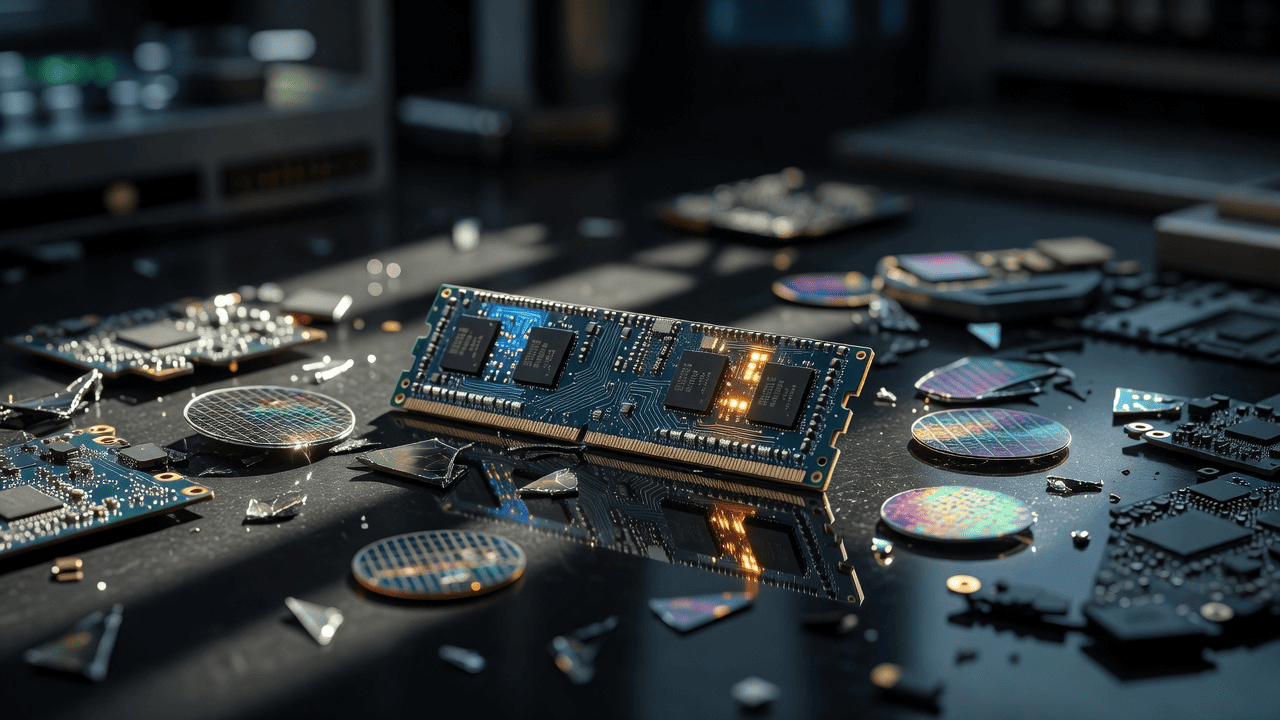
Your laptop is now fighting ChatGPT for the same chips. And it's losing.
I've watched tech prices drop year after year for the better part of two decades. That Moore's Law rhythm — better, faster, cheaper — felt permanent. But something broke in late 2025. Memory prices didn't creep up. They exploded. A 32GB stick of DDR5 RAM that cost $94 in September 2025 hit $282 by March 2026. That's a 200% jump in six months.
This isn't a supply chain hiccup or a tariff scare. It's a structural collision between two kinds of demand: yours and OpenAI's. The same memory chips that go into your phone, your gaming console, and your work laptop are now being vacuumed up by data centres at a scale the industry has never seen. And tech giants are willing to pay whatever it takes to keep their AI models running.
The result? Price hikes across every corner of consumer electronics. Apple, Microsoft, Valve, Sony — all of them raised prices in 2026, some multiple times. If you've been holding out for that new laptop or console to get cheaper, I'd reconsider.
Why AI Is Eating Your Electronics Budget
Here's the short version: AI models need absurd amounts of memory to function. Training GPT-5 or running millions of simultaneous ChatGPT queries requires server farms packed with RAM and storage. Data centres are now the dominant buyers of DRAM and NAND chips, and they're buying in volumes — and at price premiums — that consumer electronics manufacturers can't match.
James Bull, a senior analyst at RSM UK, put it bluntly: "The MacBook on consumers' desks is now competing for the same DRAM as the data centres powering ChatGPT and is losing."
The four largest US tech firms are expected to spend hundreds of billions on AI infrastructure and data centres in 2026 alone. They're signing multi-year contracts with memory manufacturers, locking in supply with upfront commitments. Micron has $22 billion in long-term AI chip orders already booked. SK Hynix sold out its entire 2026 production before the year even started.
For Dell, HP, Asus, and even Apple, that leaves scraps. And those scraps cost more.
The RAM Price Explosion by the Numbers
Let's talk specifics. According to Counterpoint Research and TrendForce, here's what happened to memory pricing between Q3 2025 and Q1 2026:
| Component | Q3 2025 | Q4 2025 | Q1 2026 | Change |
|---|---|---|---|---|
| 32GB DDR5 (PC) | $94 | $127 | $282 | +200% |
DRAM prices overall rose as much as 98% in Q1 2026. TrendForce projects another 58–63% increase in Q2. TechRadar reported that prices climbed roughly 50% in the final quarter of 2025 alone.
Government data backs this up. Wholesale prices for electronic components jumped 27% year-over-year in May 2026. Consumer-facing software and accessories climbed nearly 15% in the same period.
Some analysts started calling it "RAMageddon." I'd say that's earned.
How Major Tech Companies Responded
Apple: 20% Hikes Across the Board
On June 25, 2026, Apple raised prices on MacBooks, iPads, the HomePod, and Apple TV. The company issued a rare public statement acknowledging it had absorbed cost increases for months but could no longer justify it.
"We have never seen a component price increase this much, this quickly," Apple said.
The entry-level MacBook Neo jumped from $799 to $949 — a $150 increase. The education model went from $679 to $819. At the high end, one Vision Pro configuration now costs $3,699. Even the Apple TV 4K went up $70.
Despite the backlash, Apple's Q4 2025 revenue rose 16% year-over-year to $144 billion, its strongest growth since 2021. Consumers grumbled, but they still bought.
| Product | Previous Price | New Price | Increase |
|---|---|---|---|
| MacBook Neo | $799 | $949 | +$150 |
| MacBook Neo (Education) | $679 | $819 | +$140 |
| Vision Pro (top config) | — | $3,699 | — |
| Apple TV 4K | — | — | +$70 |
Microsoft (Xbox): Third Price Hike in 13 Months
Microsoft announced another round of Xbox price increases in August 2026. It's the third adjustment in just over a year.
| Xbox Model | Previous Price | New Price (Aug 2026) | Change |
|---|---|---|---|
| Series S 512GB | $399 | $499 | +$100 |
| Series S 1TB | $449 | $599 | +$150 |
| Series X 1TB Digital | $599 | $750 | +$151 |
| Series X 1TB Disc | $649 | $800 | +$151 |
| Series X 2TB | $799 | DISCONTINUED | — |
The disc-based Series X launched in 2020 at $500. It now costs $800 — a 60% increase in six years on a product that was supposed to get cheaper over time, not pricier.
Microsoft blamed component costs, stating that "console storage and memory prices have increased by more than 2.5x, and we expect another doubling by the fall of 2027."
There's a bitter irony here. Microsoft is one of the biggest investors in AI infrastructure. It's pouring billions into Azure data centres to power OpenAI's models. In other words, Microsoft is directly fueling the memory shortage that's forcing it to charge Xbox customers more.
Valve (Steam Deck): Up to 50% Increases
Valve wasn't spared. The Steam Deck OLED 512GB model jumped from $549 to $789 — a $240 increase. The 1TB version went from $649 to $949, nearly a 50% hike.
The newly launched Steam Machine starts at $1,049 for 512GB and $1,349 for 2TB. Valve had reportedly planned a starting price closer to $750, but memory costs surged between the November 2025 announcement and the actual release.
Valve acknowledged the reality: "Our original goal for the price of Steam Machine is no longer viable. The prices we're sharing today reflect the state of the world for manufacturing."
| Device | Previous Price | New Price | Increase |
|---|---|---|---|
| Steam Deck OLED 512GB | $549 | $789 | +$240 |
| Steam Deck OLED 1TB | $649 | $949 | +$300 |
| Steam Machine 512GB | — | $1,049 | — |
| Steam Machine 2TB | — | $1,349 | — |
Sony and Nintendo: Delayed Launches and Looming Hikes
Sony raised PS5 prices again in early 2026, citing "continued pressures in the global economic landscape." More troubling: Bloomberg reported that Sony is considering delaying the PlayStation 6 launch until 2028 or even 2029. That would disrupt Sony's entire platform engagement strategy and leave the PS5 aging longer than planned.
The rumored PS6 specs — 30GB of GDDR7 RAM in the home console, 24GB in the handheld — make it especially vulnerable to memory shortages.
Nintendo launched the Switch 2 in late 2025 at $449.99. Analysts now warn that a price hike is likely before the end of 2026. Until now, Nintendo absorbed the rising cost of RAM, but that can't continue indefinitely. If the increase happens, the Switch 2 could become one of the most expensive handhelds in the company's history.
Broader Market Fallout
It's not just flagship devices. The entire consumer electronics market is contracting.
IDC forecasts the global smartphone market will decline nearly 14% in 2026 — the largest drop ever recorded. PC sales are expected to fall roughly 9%. Console shipments are down 4.4%.
And it's not limited to gadgets. Practically everything with a circuit board is affected. Hospital equipment, industrial machinery, farm tractors — anything that needs memory is getting more expensive.
Mark Zandi, chief economist at Moody's Analytics, summed it up: "AI is juicing up inflation."
Who's Winning? Memory Chip Makers
If you're a consumer, this hurts. If you're Micron or SK Hynix, you're having the best year ever.
Micron reported quarterly revenue that quadrupled year-over-year. The company has locked in $22 billion in long-term AI chip commitments. SK Hynix sold out 2026 production before it began. These firms are prioritizing high-margin AI orders from Nvidia and others, leaving device manufacturers scrambling for leftover capacity.
It's a classic supply shock, and memory makers are cashing in.
When Will This End?
Not soon.
Micron CEO Sanjay Mehrotra told investors: "Even as we expect industry supply to improve gradually in 2028, we currently do not have line of sight as to when memory supply will be able to catch up with increasing demand."
Neil Shah, VP of research at Counterpoint, expects a "constrained supply situation" to last at least two more years. TrendForce analyst Avril Wu said this cycle "really is different" — not the usual boom-and-bust swing, but a permanent reallocation of supply toward AI.
Several Federal Reserve officials have noted that AI investments are raising prices. Alberto Musalem of the St. Louis Fed warned: "The risks of a miscalculation about its impact on productivity and inflation are too great."
Translation: don't expect relief until 2028 at the earliest. Maybe later.
What This Means for You
If you've been planning to upgrade your laptop, phone, or console, do it sooner rather than later. Prices aren't coming down. They're going up again in Q3 and Q4 2026, and manufacturers have already telegraphed more increases in 2027.
The assumption that tech gets cheaper every year is dead. We're entering a new era where AI infrastructure takes priority, and consumer electronics are the afterthought. It's a bitter pill, especially when the same companies profiting from AI are the ones raising your Xbox price.
A Marketing Brew study found that 65% of respondents said they never wanted to hear about AI again. I'd bet that number climbs as people realize their gadgets are funding the very infrastructure that's pricing them out.
So what's your move? Are you holding off on upgrades, or buying now before the next wave hits?