
- Posted on
- • Finance
Will Gas Prices Spike This Week? Strait of Hormuz Crisis Explained
- Author
-
-

- User
- iamhamzatahir
- Posts by this author
- Posts by this author
-
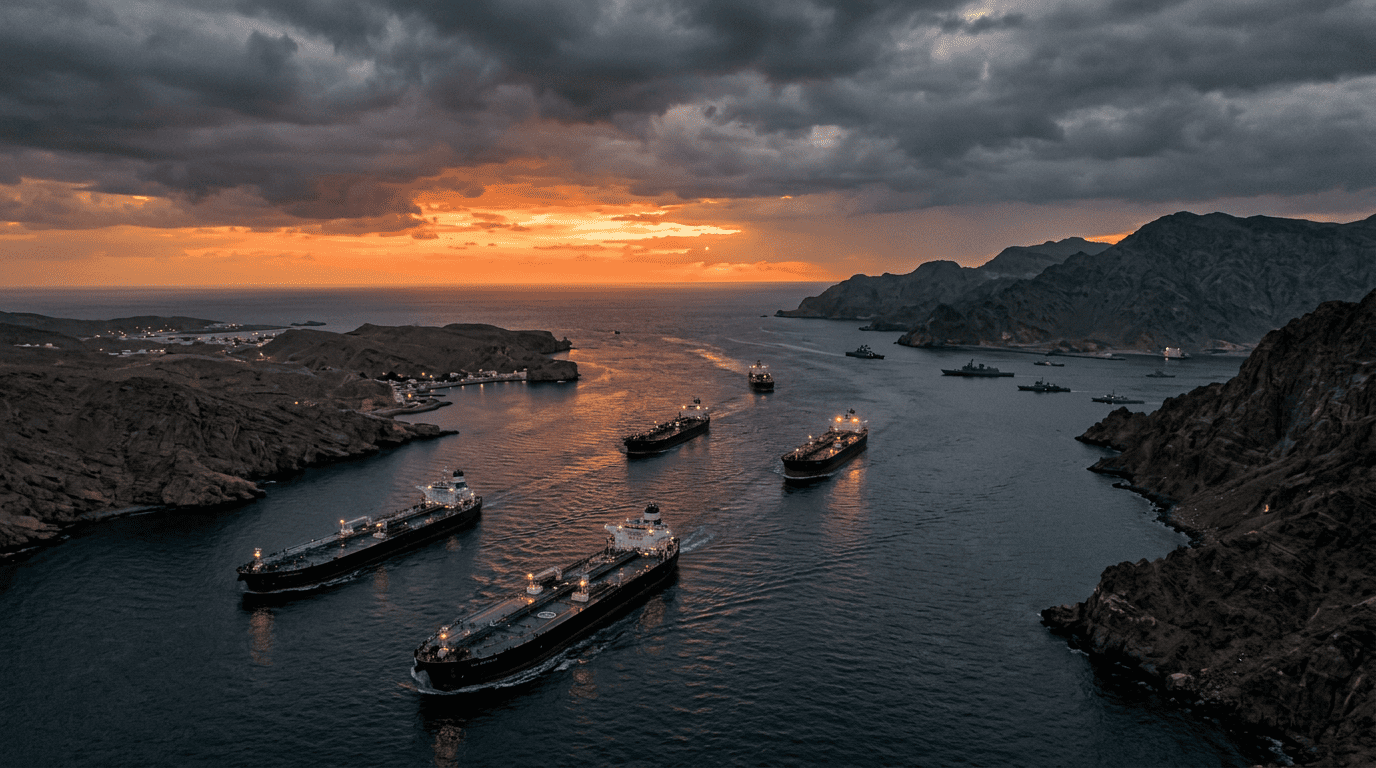
Iran and the U.S. are trading strikes over a sliver of water you've probably never thought about — but it controls whether you pay $3.87 or $5.50 at the pump this summer.
The Strait of Hormuz, a 21-mile-wide channel between Iran and Oman, carries roughly 20% of the world's oil and natural gas. When it gets blocked or contested, gas prices don't creep up. They jump.
And right now, it's contested.
Over the past four days, Iranian drones have struck vessels near the strait. The U.S. has retaliated with airstrikes on Iranian infrastructure. Iran has fired back at American military bases in Kuwait and Bahrain. A Qatari civilian was killed. Oil tanker traffic has slowed to about two-thirds of normal levels.
If you're wondering whether to fill up your tank today or wait until next week, here's what you need to know.
What's Actually Happening at the Strait of Hormuz
The crisis started when the U.S. and Iran signed a fragile ceasefire agreement earlier this month. The deal was supposed to reopen the strait, ease sanctions on Iran, and give both sides 60 days to negotiate a final agreement.
But the ceasefire didn't hold.
Iran insists it must control all traffic through the strait. The U.S. Navy, working with a multinational maritime coalition, announced it would expand a shipping route near Oman — outside Iran's direct oversight. Iran saw that as a violation and launched drone strikes on a Qatari oil tanker on Thursday.
The U.S. retaliated with airstrikes targeting Iranian drone storage facilities, air defense systems, and communication infrastructure. Iran responded by hitting residential areas near U.S. military bases in Bahrain and Kuwait. No American personnel were injured, but the escalation is real.
President Trump posted on social media that if Iran continues, the U.S. may "be forced to militarily complete the job." Iran's foreign minister warned that further strikes would trigger "the complete halt of all diplomatic processes."
Technical talks are still scheduled for Tuesday in Doha, Qatar. But fighting in Lebanon between Israel and Hezbollah — an Iranian-backed militant group — is complicating everything. The ceasefire requires all fronts to be quiet before certain issues can be resolved.
How Bad Could Gas Prices Get This Time?
Oil prices dropped last week when the ceasefire was signed. Brent crude, the international benchmark, fell to about $72 a barrel. U.S. crude settled near $69. Those are the lowest levels since the conflict began.
But prices ticked back up on Sunday as the strikes continued. Brent rose 0.9% to $72.20. U.S. crude climbed 1.3% to $70.09.
That might not sound dramatic. But here's the thing: oil prices move ahead of gas prices by a few days. What you see at the barrel level today shows up at the pump later this week.
Right now, the national average for regular gas is $3.87 a gallon, according to AAA. That's down from $4.56 in late May, when the strait was first disrupted. It's still about 30% higher than before the war started.
If the strait closes completely — or if tanker traffic drops below 50% of normal for more than a week — analysts expect oil prices to surge past $100 a barrel again. That would push gas prices toward $5 or higher in most states, and well above $6 in California and the Pacific Northwest.
History backs this up. When Iran seized a British tanker in the strait in 2019, oil prices spiked 4% in a single day. During the 1990 Gulf War, prices doubled in less than three months. The current situation is more volatile because the infrastructure damage is worse and repair timelines are measured in months, not weeks.
Should You Fill Up Your Tank Today?
Probably.
I'm not one for panic-buying, but the math here is simple. If oil prices are climbing and technical talks haven't started yet, there's very little downside to topping off your tank this weekend.
Gas stations price their fuel based on replacement cost — what they'll pay for the next tanker delivery, not what they paid for the gas already in the ground. That means even if nothing gets worse, prices won't drop much in the next few days. And if things escalate, you'll be glad you locked in $3.87 instead of $4.20.
One thing I wouldn't do: fill up jerry cans or store gasoline at home unless you have a real need and proper containers. It's dangerous, it degrades quickly, and in most situations it's illegal.
Best Gas Cashback Apps to Use Right Now
If you're going to fill up anyway, you might as well claw back a few bucks. I've tested most of the gas savings apps over the past year, and a few consistently deliver.
GasBuddy is the most reliable for finding the cheapest stations near you. It's crowdsourced, so prices update in real time. The Pay with GasBuddy card saves you an additional 5 to 25 cents per gallon at participating stations. No credit check, no fees.
Upside offers straight cashback — usually 5 to 25 cents per gallon, sometimes more during promotions. You claim an offer in the app, fill up, then upload a photo of your receipt. The money hits your account within 24 hours. I've earned about $140 since January using it on road trips.
GetUpside works similarly, but the offers tend to be slightly lower and the station network is smaller in rural areas. Still worth checking if Upside doesn't have coverage where you live.
Warehouse clubs like Costco and Sam's Club aren't apps, but they're consistently 10 to 30 cents cheaper than nearby stations. If you're already a member, it's the simplest option.
You can stack some of these. I've used a cashback credit card, claimed an Upside offer, and filled up at Costco on the same trip. Saved about 40 cents a gallon.
How to Reduce Your Fuel Spend This Summer
Filling up smarter helps. But if gas prices stay elevated — or spike again — the bigger opportunity is burning less fuel in the first place.
Hypermiling works, but don't be annoying about it. Accelerating smoothly, coasting to red lights, and keeping your speed under 65 mph on the highway can improve fuel economy by 15% or more. I'm not saying you should camp in the left lane going 55. Just stop flooring it between stoplights.
Check your tire pressure. Underinflated tires create rolling resistance. The Department of Energy estimates you lose about 0.2% in fuel economy for every 1 psi drop below the recommended level. Most people are running 5 to 8 psi low without realizing it.
Combine trips. Cold starts use more fuel. If you're running errands, chain them together instead of making multiple short trips from home.
Consider remote work if your employer allows it. This one's obvious, but a lot of people default to commuting even when they don't have to. If gas hits $5, that 40-mile round trip costs you $15 a day in a 25-mpg car. Over a month, that's $300.
If you're car shopping, now's the time to seriously look at hybrids or EVs. I'm not going to pretend everyone can afford a new car or has access to charging infrastructure. But if you were already planning to buy in the next six months, rising gas prices change the payback math fast. A Toyota Prius gets 57 mpg combined. A Chevy Bolt eliminates fuel costs entirely if you charge at home.
What Happens Next
The U.S. and Iran are supposed to meet in Doha on Tuesday. Both sides say technical talks are still on track. A senior U.S. official said Sunday that "both sides will stand down for now and vessels can move freely."
But Iran hasn't confirmed that. And the fighting in Lebanon is getting worse, not better. Israel says it won't withdraw from southern Lebanon until Hezbollah disarms. Hezbollah says it won't stop fighting until Israel withdraws. Iran says the U.S. must force Israel to comply.
It's a mess.
Even if talks succeed and the strait fully reopens, it'll take weeks for tanker traffic to normalize. Damaged infrastructure needs repair. Insurers need to reassess risk. Some shipping companies will reroute around Africa just to avoid the uncertainty.
Oil analysts don't expect prices to return to pre-war levels in 2026. That means gas prices are likely to stay elevated — somewhere between $3.80 and $4.50 — even if things don't get worse.
So yeah, fill up your tank. Download one of those apps. And if you've been thinking about carpooling or working from home more often, this might be the push you need.
Because the Strait of Hormuz isn't going to calm down just because we're tired of expensive gas.