
- Posted on
- • Finance
China EU Trade Mechanism: What June 2026 Means for Supply Chains
- Author
-
-

- User
- iamhamzatahir
- Posts by this author
- Posts by this author
-
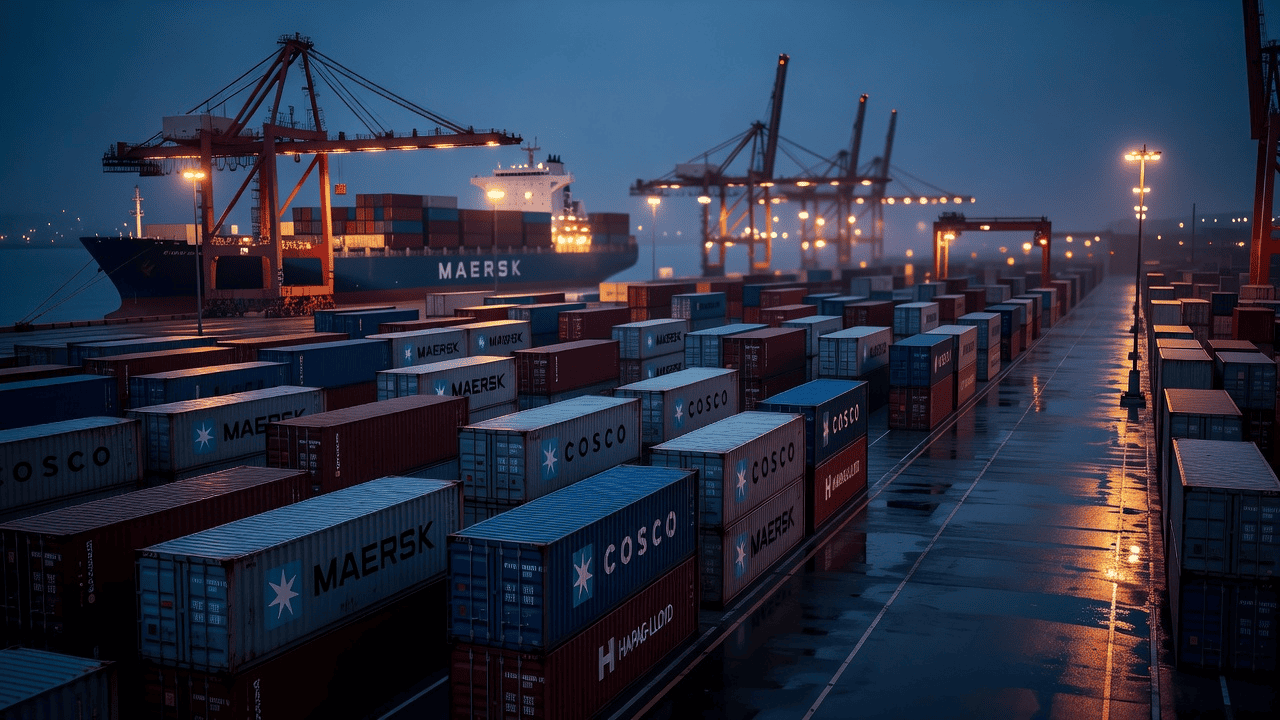
For seven years, China and the European Union didn't sit down for a formal trade meeting. Seven years of widening deficits, rare earth restrictions, EV tariff disputes, and mounting frustration on both sides — all without a dedicated channel to talk things through. That changed on June 29, 2026, when the two sides officially launched the China EU trade mechanism they're calling the Trade and Investment Consultations, or TIC.
The question isn't whether this mechanism matters. It does. The real question is whether it can actually produce results before the tensions it's designed to address spiral further out of control.
What the China EU Trade Mechanism Actually Covers
China's Commerce Minister Wang Wentao and EU Trade Commissioner Maroš Šefčovič co-chaired the first meeting in Brussels. The joint statement they released — the first of its kind since 2019 — identified four workstreams that will anchor the consultations going forward.
Here's what each one targets:
- Trade and investment balancing: Both sides exchanged lists of market access issues and agreed that expanding access could help correct the lopsided trade relationship. They discussed tariff and non-tariff measures — a diplomatic way of saying there's a lot of ground to cover on what gets blocked, taxed, or slowed at the border.
- Export controls: This one is largely about rare earth elements and critical minerals. China tightened export restrictions twice in 2025, and the EU is acutely exposed. The two sides acknowledged the need for stability in global supply chains and committed to strengthening their existing export control dialogue.
- Intellectual property rights: Less dramatic than rare earths, but equally important for European firms doing business in or with China. The focus here is on exchanging information about regulatory frameworks and licensing policies — foundational work that could reduce friction over time.
- WTO reform: Both China and the EU expressed support for making the World Trade Organization more effective. That's a shared interest, particularly as the multilateral trading system faces pressure from multiple directions.
They also agreed to create a joint monitoring mechanism to track trade flows, share data, and measure whether any of this cooperation actually leads somewhere. That monitoring piece matters more than it might sound — without it, commitments like these tend to evaporate into diplomatic nicety.
Why This Took So Long — and Why It's Happening Now
The backdrop to this China EU investment consultation is almost comically tense. The EU's goods trade deficit with China hit €360.6 billion in 2025 — roughly a billion euros a day — and grew another 10% in early 2026. For the first time, every single EU member state ran a deficit with Beijing. Not some. All twenty-seven.
Then there's the rare earth situation. China controls about 60% of global rare earth production and a staggering 90% of refining capacity, according to the International Energy Agency. When Beijing imposed export controls in April and October 2025, the ripple effects were immediate. European Central Bank economists estimated that over 80% of large European companies sit within three supply chain links of a Chinese rare earth producer. That's not a distant risk. That's a direct one.
EV tariffs added another layer of friction. The EU imposed duties on Chinese electric vehicles starting in 2024, and China responded with retaliatory measures against European dairy and brandy exports. By January 2026, Brussels had shifted to minimum import prices — essentially price floors — to replace the explicit tariffs. Chinese manufacturers adapted quickly, pivoting toward hybrid vehicles and eventually recovering their EV shipment volumes anyway.
Imagine you're a European auto parts manufacturer watching all this unfold. Your raw materials are subject to Chinese export controls. Your finished vehicles face retaliatory barriers in China. And the competitive threat from Chinese EVs hasn't actually diminished despite the tariffs. You don't just want a dialogue mechanism — you need one.
The October Deadline and What "Tangible Results" Might Look Like
Šefčovič set a clear marker: he wants tangible results by October, when he's expected to travel to Beijing for the next round of talks. Wang issued the invitation himself. That four-month window is tight, especially for four workstreams this complex.
So what would "tangible" actually mean?
On trade balancing, the most realistic outcome would be specific market access commitments — particular sectors or products where one side agrees to reduce barriers. Don't expect a grand bargain. Expect targeted concessions that both sides can point to as evidence of progress.
On export controls, Wang reportedly reassured Šefčovič that China's existing restrictions on rare earths and permanent magnets won't disrupt EU supply chains. Whether that reassurance holds through October depends on geopolitical conditions that neither side fully controls, particularly the trajectory of US-China tensions.
On intellectual property, October might be too soon for anything concrete. But establishing a regular cadence of information sharing would itself count as progress, given how long these conversations have been dormant.
WTO reform is the longest of long games. Any joint position that China and the EU can bring to multilateral negotiations would carry weight, but expecting a breakthrough by autumn would be optimistic.
Global Supply Chain Implications of China EU Consultations
Here's where this gets practical for businesses, logistics operators, and procurement teams watching from the sidelines.
The joint monitoring mechanism could bring greater predictability to trade flows between the two blocs. Right now, companies making sourcing decisions operate with significant uncertainty about what restrictions, tariffs, or retaliatory measures might land next quarter. A functioning data-sharing arrangement between Brussels and Beijing would at least reduce the guesswork.
The export controls workstream is the one with the most direct supply chain relevance. European manufacturers in sectors from wind turbines to defense electronics depend on Chinese rare earth inputs. If this mechanism produces even incremental progress on supply stability, it changes the risk calculus for companies deciding whether to invest in alternative sourcing or stockpile critical materials.
The EU is simultaneously pursuing a broader de-risking strategy — not decoupling from China entirely, but reducing critical dependencies. The European Commission is reportedly preparing legislation that would require EU companies to diversify their sources for key supplies. That's a significant policy direction, and it runs parallel to, not against, these consultations. Brussels is essentially talking with one hand and building trade defenses with the other.
For companies operating in sectors like clean energy, automotive, pharmaceuticals, and advanced manufacturing, the smart move is probably to treat this mechanism as a positive signal without treating it as a guarantee. Diversification strategies shouldn't pause because a consultation framework now exists.
Who Benefits and Who Should Be Worried
European exporters facing Chinese market access barriers stand to gain the most if the trade balancing workstream delivers. Agriculture, luxury goods, and advanced machinery are sectors where EU producers have long complained about uneven treatment in China.
IP-intensive industries — think software, pharmaceuticals, and industrial design — could benefit from clearer rules around licensing and regulatory frameworks in China. That's been a chronic frustration for European firms, and even modest improvements would matter.
WTO reform advocates on both sides get a boost from having two of the world's three largest trading entities aligned on the need for institutional modernization.
On the other side, companies that have profited from the current asymmetry may face pressure. Chinese manufacturers enjoying favorable access to European markets while their EU counterparts struggle in China could see conditions shift. European firms that have built supply chains entirely around cheap Chinese inputs without backup options are also exposed — not necessarily to this mechanism, but to the broader de-risking trend it sits within.
Can a Mechanism Fix a Structural Problem?
I've seen consultation mechanisms come and go in trade policy. Some produce real outcomes. Many become elaborate rituals where officials meet, issue statements, and change nothing. The difference usually comes down to two things: political will and deadlines.
This mechanism has both, at least for now. The October timeline creates urgency. The scale of the problems — a billion-euro-a-day trade deficit, critical mineral dependencies, retaliatory tariff cycles — creates motivation. And the broader geopolitical context, particularly US trade policy unpredictability, gives both sides a reason to find common ground where they can.
Jian Junbo, who directs the Center for China-Europe Relations at Fudan University, put it well: economic and trade frictions between China and the EU will persist in the short term, but with a mechanism in place, there's at least hope of easing them. That's a realistic assessment. Not optimistic, not cynical — just clear-eyed about what structured dialogue can and can't accomplish.
The EU's own position frames the relationship as "critically unbalanced" due to asymmetric market openness and what Brussels calls systemic distortions in China's economic model. That language doesn't soften just because a new consultation framework exists. But having a formal channel to address those imbalances beats the alternative, which was essentially seven years of no channel at all.
This mechanism also slots into an already complex web of bilateral architecture. The China-EU High-Level Economic and Trade Dialogue has existed since 2008. The overall relationship is still governed by an agreement signed in 1985. Negotiations for a modern investment agreement have been frozen since the European Parliament halted ratification of the Comprehensive Agreement on Investment in 2021. The TIC doesn't replace any of these structures — it adds another layer, specifically focused on the trade irritants that have become impossible to ignore.
Whether October produces something meaningful or just another joint statement will tell us a lot about the next phase of China-EU economic relations. If you're in a business that touches these supply chains — and most globally operating businesses do — this is worth watching closely. What's your biggest concern about how this plays out?