
- Posted on
- • Finance
US Tariffs Push Europe and Brazil Into a Trade Alliance Investors Can't Ignore
- Author
-
-

- User
- iamhamzatahir
- Posts by this author
- Posts by this author
-
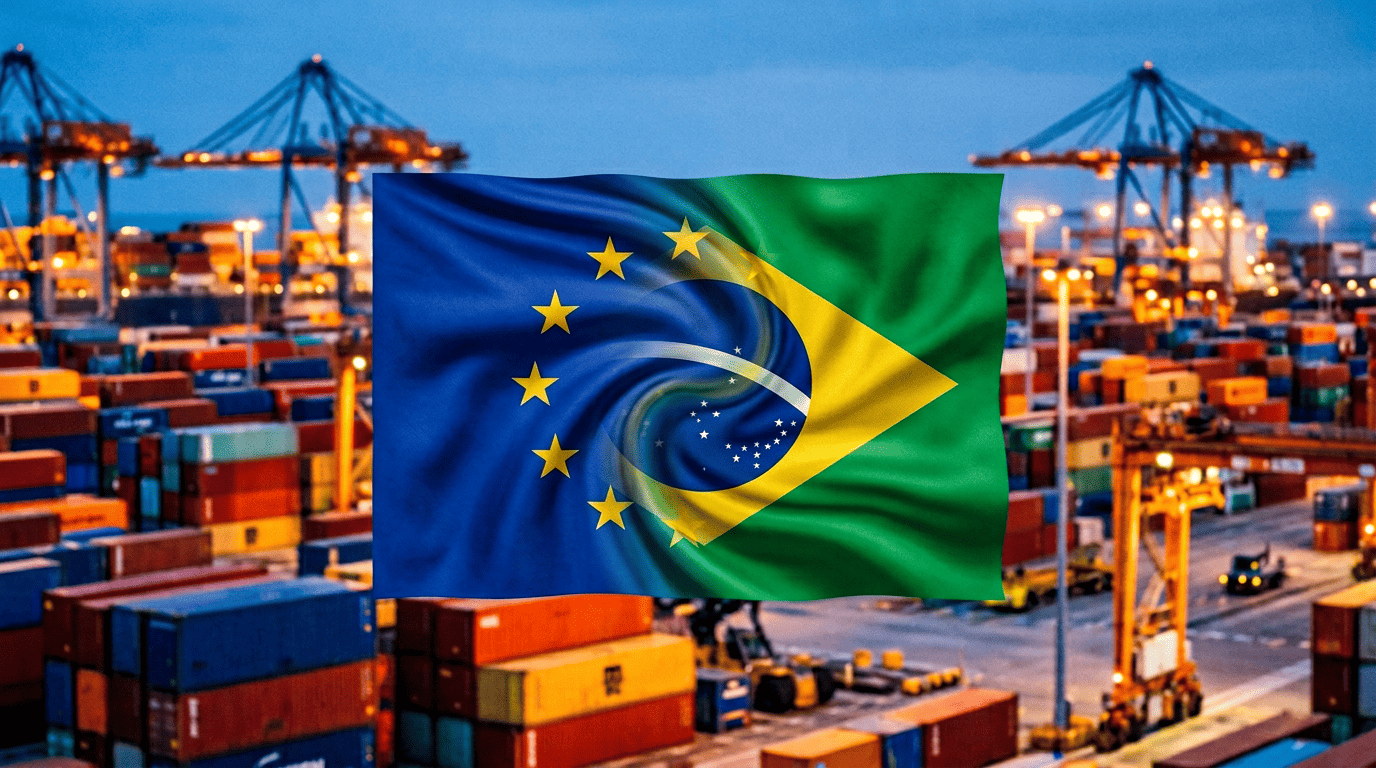
While most investors fixate on tariff headlines and geopolitical drama, a quieter realignment is reshaping global trade flows—and creating opportunities that haven't hit the mainstream yet.
US tariffs are doing something unexpected: they're driving Europe and Brazil together. Fast.
After decades of stalled negotiations, the European Union and Mercosur—a South American trade bloc anchored by Brazil—finally pushed through a comprehensive trade agreement in May 2026. The timing wasn't coincidental. Both regions got slapped with unpredictable US tariffs, and both decided they needed insurance against Washington's whims.
For investors, this isn't just diplomatic theater. It's a structural shift that's already moving capital, opening markets, and repositioning entire industries. And most portfolios haven't adjusted yet.
What's Actually Happening Between Europe and Brazil
The EU-Mercosur deal cuts tariffs on hundreds of goods—everything from airplane parts to agricultural exports to cachaça, Brazil's signature sugarcane spirit. But the real story isn't what's being traded. It's why the deal finally happened after years of going nowhere.
Roberto Jaguaribe, a former Brazilian trade official, put it plainly: unpredictable relations with the United States "tends to lead to seeking additional partners." Translation? When you can't count on your biggest trading partner to play by consistent rules, you find new ones.
This isn't a one-off agreement. Brazil and its Mercosur partners have rushed to sign trade pacts with four non-EU European countries, and they're in active talks with Canada, Japan, and the United Arab Emirates. For a country that historically maintained high tariffs and a protectionist stance, this represents a dramatic policy reversal.
Larissa Wachholz, another former Brazilian trade official, described it as "a very important moment of change" in Brazilian trade policy. She doesn't see the country reverting to full protectionism. Neither should investors.
Winners and Losers in the New Trade Reality
Trade realignments always create winners and losers. The question is which side of that divide your portfolio sits on.
Brazilian exporters are winning. Agricultural producers, in particular, gain immediate access to European markets with reduced tariffs. Brazil is already a dominant global supplier of soybeans, beef, and coffee. Lower barriers to the EU—a market of 450 million consumers—amplify that advantage. Aerospace manufacturers like Embraer also benefit from tariff cuts on airplane parts, making Brazilian jets more competitive against American rivals like Boeing.
European manufacturers are winning. German automakers and industrial equipment producers get better access to South America's growing middle class. Machinery, pharmaceuticals, and automotive exports face fewer barriers in Brazil, Argentina, Uruguay, and Paraguay. That's significant when you're looking for growth outside a stagnant domestic market.
US companies are losing market share. American agricultural exporters face stiffer competition in Europe as Brazilian beef and soybeans become comparatively cheaper. US manufacturers selling into South America lose ground to European competitors who now enjoy preferential treatment. This isn't speculation—it's basic tariff math.
The shift is already visible in trade flows. Brazilian distillers who've struggled for years to break into European spirits markets are suddenly optimistic. Assja Schymura of Pindorama, a cachaça producer, expects "immense" growth once initial barriers clear. If a niche product like cachaça is seeing opportunity, imagine what's happening in soybeans and steel.
Three ETFs Positioned to Benefit From This Shift
If you're convinced this trade realignment matters—and you should be—the next question is how to position for it. Here are three exchange-traded funds that offer exposure to the right parts of this story.
iShares MSCI Brazil ETF (EWZ) is the most direct play. It tracks large and mid-cap Brazilian equities across sectors. You get exposure to the exporters benefiting from expanded European access, plus domestic Brazilian companies positioned to grow as trade liberalization continues. The fund is heavily weighted toward financials, materials, and energy—exactly the sectors that benefit when trade barriers fall and capital flows increase.
Volatility is a feature, not a bug. Brazil is an emerging market with political risk and currency swings. But if you believe the trade policy shift is structural rather than temporary, that volatility creates entry points.
iShares MSCI Eurozone ETF (EZU) gives you access to European companies expanding into South American markets. Think industrials, consumer goods, and automotive manufacturers. These aren't the flashy tech names that dominate US indices. They're steady exporters who've been waiting for exactly this kind of market access. As tariffs drop and logistics improve, their earnings get a tailwind that analysts haven't fully priced in yet.
Vanguard FTSE Emerging Markets ETF (VWO) offers broader diversification while still capturing the Brazil-Europe dynamic. It holds Brazilian equities alongside other emerging markets that are also signing trade deals and moving away from US-centric trade relationships. You sacrifice some concentrated exposure, but you gain protection against country-specific shocks.
None of these are risk-free. Emerging market ETFs can be choppy. Currency fluctuations matter. Political changes in Brazil or Europe could slow implementation of the trade deal—it's currently under review by the EU Court of Justice, with a ruling expected in the next two years. But the underlying thesis remains: when major trading blocs realign, the early movers get the best returns.
Is the US Isolating Itself—And Does It Matter for Your Portfolio?
Here's the uncomfortable question: are we watching the United States voluntarily step back from trade relationships that took decades to build, and if so, what does that mean for portfolios overweight on domestic US equities?
The EU-Mercosur agreement goes beyond tariff cuts. It includes commitments to uphold democratic institutions and remain in the Paris climate agreement—explicitly framed as a response to Washington's retreat from global climate and democracy initiatives. At a recent conference on Europe-Latin America relations, Finnish diplomat Anna-Kaisa Heikkinen argued that countries committed to the international order "need to get our act together."
That's diplomatic language for "we can't rely on the US anymore."
Trade policy isn't just about economics. It's about relationships, predictability, and trust. When the US becomes unpredictable, other countries hedge. They sign deals with each other. They build supply chains that bypass American ports and American intermediaries. They denominate transactions in euros and yuan instead of dollars.
This doesn't mean the US economy collapses. It means the rest of the world grows without needing us as much. And if you're 100% invested in US equities, you're missing that growth.
Long-term, this could accelerate a shift that's already underway: the gradual decline of US market dominance. Emerging markets represent a larger share of global GDP every year. If they're trading more with each other and less with the US, that's where the growth is. Your portfolio should reflect that.
What Smart Investors Are Doing Right Now
Positioning for a trade realignment isn't about making a single dramatic bet. It's about tilting your portfolio toward the regions and sectors likely to benefit while managing downside risk.
Start by evaluating your international exposure. Most US investors are heavily domestic-biased—often 70% or more in US equities. That made sense when the US was the undisputed engine of global growth. It makes less sense when Europe and South America are building trade relationships that explicitly don't include us.
Consider increasing your allocation to emerging markets, particularly Brazil and other Mercosur countries. You don't need to go all-in. Even shifting 5–10% of your equity allocation toward emerging market ETFs gives you exposure to this trend without abandoning your core holdings.
Look at sector rotation. European industrials and Brazilian materials and agriculture are positioned to outperform as the trade deal takes effect. US sectors that depend on exports to Europe or South America—particularly agriculture and certain manufacturing subsectors—face headwinds.
Watch currency movements. As trade flows shift, so do currency valuations. A stronger Brazilian real or euro relative to the dollar boosts your returns on international holdings. Conversely, if the dollar weakens as the US becomes less central to global trade, your domestic purchasing power for international assets improves.
And pay attention to implementation timelines. The EU Court of Justice is reviewing the Mercosur agreement, with a decision expected within two years. That review could lead to modifications, particularly around agricultural provisions that worry European farmers. If the deal gets delayed or watered down, the investment thesis weakens. If it's approved as-is, the opportunity gets bigger.
This isn't about predicting the future. It's about positioning for a range of outcomes where the most likely scenario involves continued trade realignment away from US-centric relationships.
Are you positioned for a world where Europe and Brazil matter more to each other than either does to the United States? Because that world isn't coming—it's already here.