
- Posted on
- • Space Tourism
Space Tourism Training Requirements in 2026: A Company-by-Company Breakdown
- Author
-
-

- User
- iamhamzatahir
- Posts by this author
- Posts by this author
-
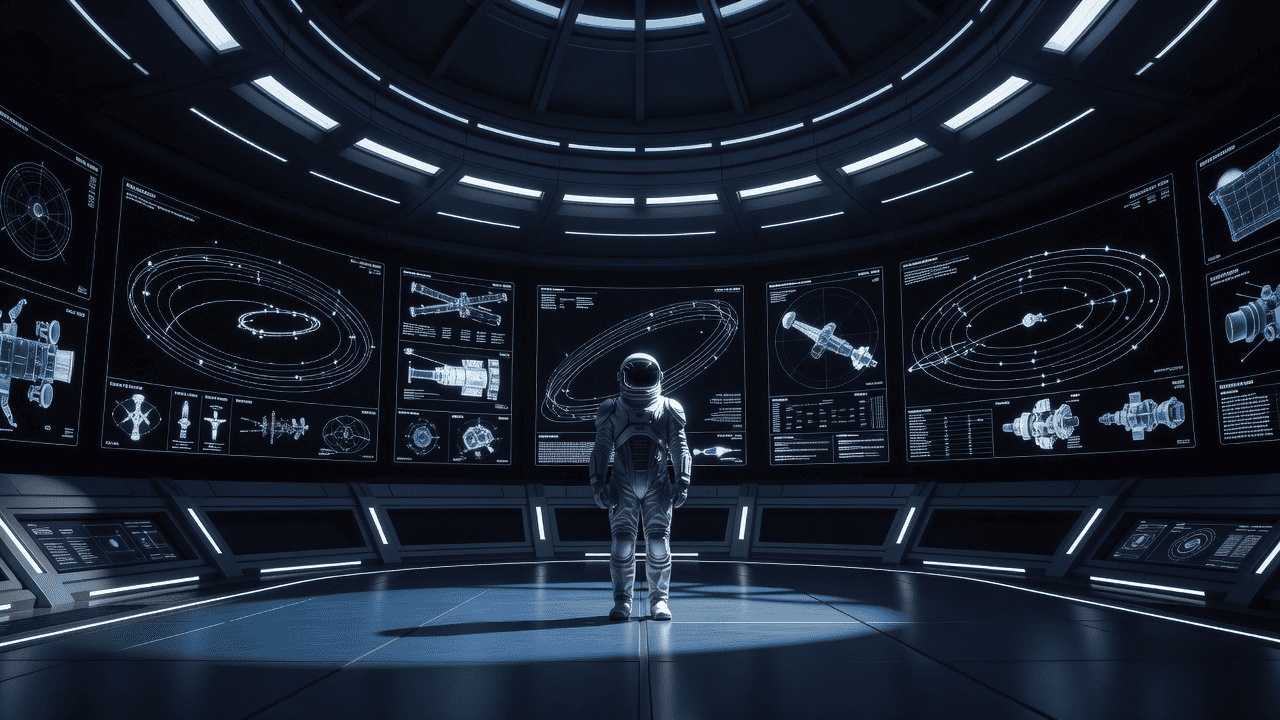
Most people assume that buying a ticket to space is the hard part. It isn't. Getting your body — and your mind — ready for what comes next is where things get genuinely interesting.
Space tourism training requirements vary more dramatically than almost any other purchase you'll ever make. Spend a quarter of a million dollars on a suborbital hop and you might train for three days. Spend $55 million on an orbital mission and you're looking at months of preparation that rivals what professional astronauts go through. The gap between those two experiences isn't just financial — it's physical, psychological, and technical.
Here's a full breakdown of what each major operator actually expects from you in 2026, and why those requirements exist in the first place.
Why Space Tourists Need Training At All
Fair question. You're a paying passenger. Why can't you just strap in and go?
Because space is actively hostile to the human body. From the moment a rocket ignites, your body is subjected to forces it was never designed for. Passengers on suborbital flights are exposed to G-forces on the order of 2 to 4.5 times normal gravity. That doesn't sound extreme until you're actually experiencing it — your chest feels crushed, your vision narrows, and even breathing becomes an effort. Without preparation, disorientation and panic are genuine risks, and panic aboard a spacecraft is the last thing anyone needs.
Then comes the weightlessness. The microgravity experience affects each individual differently, with some adapting quickly while others require several minutes to adjust. Movement becomes fluid and three-dimensional, requiring new muscle memory and spatial awareness. Bumping into equipment, triggering emergency switches by accident, or simply being unable to control your own body — these are real concerns for untrained passengers.
Training also exists because emergencies happen. Cabin pressure loss, communication failures, aborted landings — every scenario requires a passenger who can follow instructions calmly and competently, not one who freezes.
Suborbital Space Tourism Training: Virgin Galactic and Blue Origin
If your budget tops out somewhere south of $1 million, suborbital is your category. Two operators have dominated this space: Virgin Galactic with its SpaceShipTwo vehicle, and Blue Origin with New Shepard. Both offer brief trips past the edge of the atmosphere — roughly 10 minutes of actual spaceflight — and both keep their training programs deliberately accessible.
Virgin Galactic has historically run a three-day training program at Spaceport America in New Mexico. Virgin Galactic's three-day program breaks down into a day of classroom work, a day in simulators, and a final day prepping for flight. It's designed for busy professionals. You're not expected to become a pilot. These companies want to keep things simple for passengers, skipping deep technical details and sticking to emergency response and basic operations.
That said, the program covers genuine ground. Space tourists run through emergency drills, hop in a centrifuge for a quick spin, and practice getting in and out of their spacecraft. Virgin Galactic, for example, encourages passengers to interact with controls at certain points, which helps build familiarity even if no one's handing over the flight stick.
Blue Origin runs a similar schedule for New Shepard flights. Training ranges to approximately 14 hours for Blue Origin suborbital flights. It's worth noting that Blue Origin announced in early 2026 a pause in New Shepard tourist flights of at least two years as the company redirects focus to its New Glenn rocket and Blue Moon lunar lander program. So while the training model remains relevant, prospective suborbital passengers will need to monitor the operator's return to service.
For both companies, the physical bar is intentionally low. There are no strict age limits — passengers from 18 to 90-plus have already flown. A December 2025 New Shepard mission included the first wheelchair user in space, a significant marker of how inclusive suborbital travel has become relative to earlier spaceflight.
Orbital Space Tourism Training Requirements: SpaceX and Axiom Space
This is where the comparison gets stark. Orbital missions aren't a ten-minute thrill — they're multi-day expeditions involving docking maneuvers, life support systems, and living in a sealed metal container 420 kilometers above Earth. The training reflects that reality.
SpaceX Crew Dragon missions for private passengers operate on a completely different timeline. Orbital flights demand a lot more. SpaceX's Crew Dragon missions for private passengers usually take three to six months of training. The Inspiration4 mission — the first all-civilian orbital flight, in September 2021 — reportedly pushed closer to that upper end of the range. SpaceX private training for missions like Inspiration4 spans about 5 to 6 months.
What does that time actually cover? SpaceX gives Crew Dragon passengers months to master life support systems, orbital basics, and emergency responses. For SpaceX orbital missions, the training spans several months and includes complex systems management, emergency survival training for potential water landings, and — if scheduled — preparation for civilian spacewalks. Polaris Dawn in September 2024 demonstrated just how far that can go: Jared Isaacman and Sarah Gillis performed the first commercial spacewalk during that mission.
Axiom Space takes orbital training even further. Their missions fly to the International Space Station, which means training isn't just with SpaceX — it spans multiple international agencies. Collaborating with NASA and various international partner nations necessitates a thorough understanding of the space station's systems and operations. The European Space Agency and JAXA have provided astronaut training programs to ensure Axiom crews are adept at functioning within the ISS's multinational environment.
Space station visits are the most demanding. These missions mean six months or more of training, pretty much like what professional astronauts go through. Tourists learn station operations, scientific tasks, and how to handle long stays in space. The reported $55 million price point covers the orbital stay, transportation to and from the ISS, and a 15-week astronaut-training program. Four Axiom missions flew between April 2022 and July 2025, carrying a total of 14 crew members for stays of 8 to 21 days.
Imagine signing up for a two-week stay on the ISS and being told your preparation schedule reads like a government astronaut's first year. That's Axiom. And for passengers who've paid tens of millions for the experience, most seem to agree it's worth every hour.
Medical and Physical Requirements: What Gets You Cleared — or Grounded
You don't need to be an Olympic athlete to go to space. But you do need a body that can handle the ride.
Space tourism candidates undergo comprehensive medical evaluations that extend far beyond typical health screenings. These assessments include cardiovascular stress tests, vestibular function analysis, and psychological evaluations designed to identify potential issues in zero-gravity environments. Blood pressure monitoring, eye examinations, and bone density scans form part of the standard protocol.
The centrifuge is a core part of physical preparation for nearly every mission type. The preparation phase involves specialized physical conditioning that focuses on G-force tolerance and spatial orientation. Participants spend time in centrifuge machines that simulate launch and re-entry forces, typically reaching 3 to 4 G's during training sessions. For suborbital passengers, this might be a brief orientation session. For orbital candidates, it's repeated and progressive.
Medical clearance can take 4 to 8 weeks to complete, with some conditions requiring ongoing monitoring. The standards differ meaningfully between operators. Suborbital flights involve minimal physical screening with short training focused on cabin orientation, while orbital flights require more extensive exams.
The broader medical picture is still evolving. Commercial human spaceflight is an emerging sector, and medical guidelines regarding fitness to fly for spaceflight participants continue to evolve. The demographics of the typical astronaut are changing from young, high-performing professionals with minimal medical concerns to adults of all backgrounds, ages, and degrees of health. That's a significant shift — and one the medical community is actively working to keep up with.
How Training Is Changing: Shorter Programs, Smarter Technology
The most interesting development in space tourism training right now isn't physical — it's digital.
Space exploration relies increasingly on VR for astronaut training, planetary exploration simulations, and mission preparation. NASA and other agencies use immersive technology to help crews experience low-gravity environments and visualize complex mission data. A major advantage of VR training for human spaceflight is accessibility — astronauts can train in the virtual environment of a space station while being physically located in different parts of the world.
For commercial operators, this matters enormously. Simulators for SpaceX Dragon and Blue Origin New Shepard offer realistic environments where tourists practice reading altitude, acceleration, and cabin pressure gauges, and see how spacecraft maintain the right orientation during flight and reentry. VR layers on top of that, allowing scenario repetition at a fraction of the cost and without geographical constraints.
The trend is toward programs that are shorter without being shallower. Parabolic flights — the zero-gravity aircraft experience sometimes called "vomit comet" flights — are increasingly used as pre-mission conditioning. They give passengers real exposure to weightlessness before launch day, which means their first encounter with microgravity isn't onboard an actual spacecraft at 100 kilometers altitude.
Accessibility is improving in other ways too. Training schedules are increasingly accommodating working professionals, with concentrated weekend sessions and flexible timing where possible. The industry understands that its customers have lives, jobs, and commitments — and a six-month preparation program that can only be done Monday through Friday is a barrier to entry that makes no commercial sense.
What this points to is a future where the training gap between suborbital and orbital missions narrows — not because orbital gets easier, but because the tools for delivering high-quality preparation become more efficient. VR that can accurately simulate cabin emergencies, AI-driven medical monitoring that catches problems early, and modular training schedules that fit around real lives: all of this is already in development or deployment across the industry.
The honest takeaway? The training is the experience. Every hour spent in a centrifuge, simulator, or classroom is part of the journey you paid for. The passengers who seem to get the most out of their flights — in every interview, every mission debrief — are the ones who approached preparation with the same seriousness as the flight itself. That's worth keeping in mind whether you're planning a three-day suborbital prep or a six-month march toward the ISS. Which one are you aiming for?