
- Posted on
- • Space Tourism
The Overview Effect: What Space Tourists Actually Feel
- Author
-
-

- User
- iamhamzatahir
- Posts by this author
- Posts by this author
-
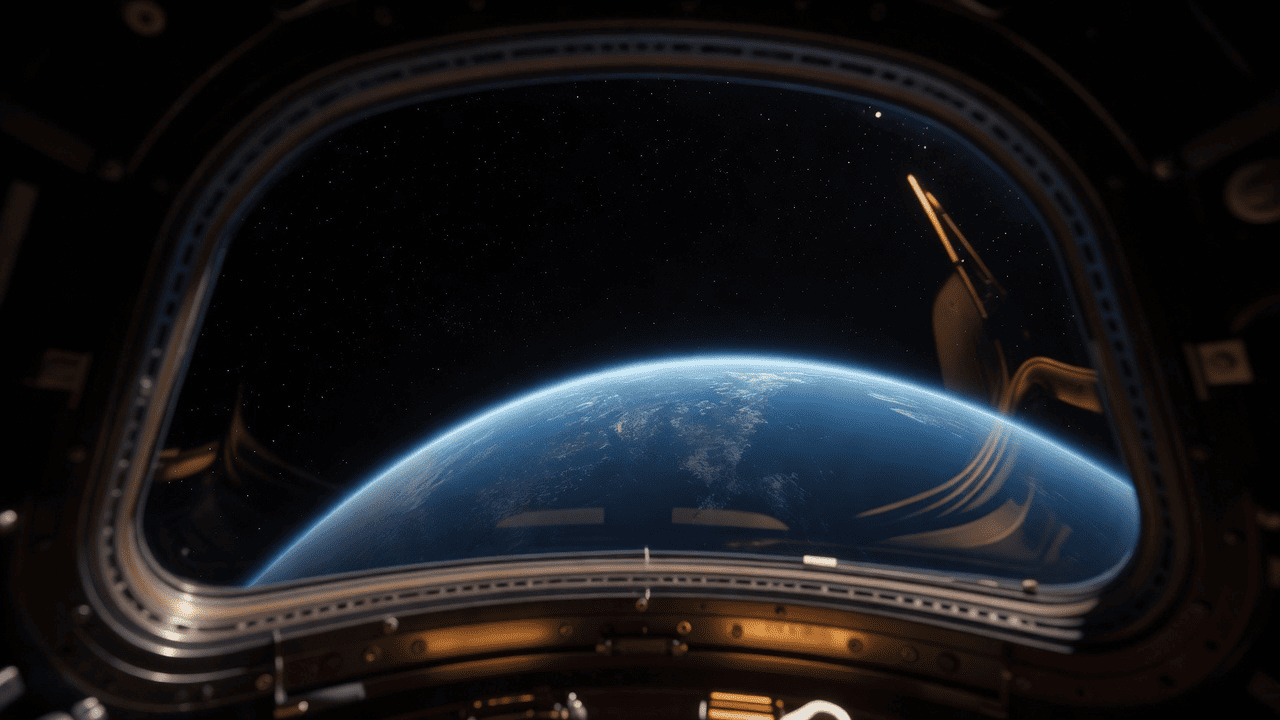
Nobody told William Shatner he'd come back from space weeping. Not with joy — with grief. The man who spent decades playing humanity's most confident space explorer, Captain Kirk, stepped off a Blue Origin rocket in October 2021 and couldn't stop crying. He wasn't sure why at first. Hours later, he figured it out: he was in mourning for a planet that looked unbearably fragile from above.
That moment — raw, unscripted, and completely unexpected — gave the world its most visible window into something astronauts have talked about quietly for decades. It's called the overview effect space tourism researchers and psychologists now study seriously, and it's far stranger, deeper, and more emotionally complex than any pre-flight brochure will ever tell you.
So what actually happens when ordinary people leave Earth? Not the physics of it. The feeling of it.
What the Overview Effect Actually Is
The term "Overview Effect" was coined by author Frank White in his 1987 book, The Overview Effect: Space Exploration and Human Evolution. He described it as a cognitive shift experienced by astronauts during spaceflight, characterised by a profound understanding of the interconnectedness of life on Earth, a sense of awe and wonder at the planet's beauty, and a renewed sense of responsibility for its protection.
Simple enough on paper. In practice, it hits people like a truck.
Researchers have described the effect as "a state of awe with self-transcendent qualities, precipitated by a particularly striking visual stimulus." The most prominent common aspects of personally experiencing the Earth from space are appreciation and perception of beauty, unexpected and even overwhelming emotion, and a heightened sense of connection to other people and the Earth as a whole.
Interestingly, the overview effect is not experienced uniformly, with personality traits — such as a need for cognition and religiousness — playing a role. In general, though, the effect appears to be associated with feelings of compassion and self-transcendence, a change of perspective and identity, and awe. Some astronauts consider it a spiritual experience leading to self-transcendence — "a temporary feeling of unity characterised by reduced self-salience and increased feelings of connection."
What makes it distinct from, say, watching a beautiful sunset? The absence of borders. The absence of scale. Researchers and former astronauts describe seeing our planet from orbit, suspended in the darkness, without the borders, divisions, or distinctions that define daily life on the surface. That removal of context — no countries, no roads, no noise — seems to be the psychological mechanism that cracks something open.
Professional Astronauts vs. Space Tourists: The Same Effect, Different Intensity?
Here's where it gets interesting. Professional astronauts are trained within an inch of their lives. They arrive at the window having simulated virtually every aspect of spaceflight — except the emotional ambush of actually seeing Earth from above for the first time.
Frank White has described a "big difference" between professional astronauts, who are focused on their missions, versus people who have recently been going into space "with an intention to have an experience" and who may already be aware of the overview effect.
That distinction matters more than it might appear. A trained mission specialist might be running checklists and monitoring systems when the view of Earth fills their window. A civilian tourist? They rushed straight to the glass. Edgar Mitchell, who walked on the Moon during Apollo 14, described it as an instant global consciousness — a sense that all of humanity's conflicts and divisions looked arbitrary from that vantage point. Civilians, it turns out, often arrive at that same conclusion faster — because nobody's asking them to fly the ship.
According to Frank White, everyone who travels to space experiences an "overview effect" — an emotional or mental reaction strong enough to disrupt that person's previous assumptions about humanity, Earth, and the cosmos. Everyone's overview effect is unique to them, but there are reactions that are more common than others.
What Space Tourists Actually Report Feeling
Let's get specific. Because the accounts from civilian passengers are different in texture from anything the standard astronaut corps produced — less filtered, more visceral.
William Shatner is the case study everyone should read first. His reaction defied expectation so thoroughly that it became its own cultural moment. He wrote: "I saw a cold, dark, black emptiness. It was unlike any blackness you can see or feel on Earth. It was deep, enveloping, all-encompassing." And then he turned back toward Earth. As Shatner himself later explained: "Everything I had thought was wrong. I had a different experience, because I discovered that the beauty isn't out there, it's down here, with all of us. Leaving that behind made my connection to our tiny planet even more profound."
Shatner described the experience as "among the strongest feelings of grief I have ever encountered" and one of "overwhelming sadness." Back on solid ground, he describes a "returned feeling of hope" that mankind can see through their differences and rededicate themselves to the planet.
Grief turning into hope. That arc — almost unbearable in the moment, clarifying afterward — is more common than you'd think.
The Inspiration4 crew offers a different but equally striking data set. Inspiration4 was a 2021 human spaceflight operated by SpaceX. The mission launched the Crew Dragon Resilience on September 16, 2021, from Kennedy Space Center, placed the capsule into low Earth orbit, and ended on September 18, 2021 — making it the first orbital spaceflight with only private citizens aboard.
Three days in orbit gave them something suborbital tourists simply don't have: time to sit with it. Crew member Chris Sembroski said: "You're seeing the Earth in a totally different way. And seeing sunrise and sunset, every 90 minutes, being able to see all parts of the world, in that period of time. People say the world's getting smaller, and when you go around it in an hour and a half, it feels really small."
Hayley Arceneaux spoke of the impact of seeing Earth from the large domed window inside the spacecraft. "That last view of the Earth from the cupola made me emotional because it was just so awe-inspiring, and I knew I'd be thinking about that for the rest of my life," she said.
The overview effect is often accompanied by intense emotions. Many space tourists describe feeling a deep sense of joy, peace, and even a spiritual connection to the universe. For some, the experience can also evoke feelings of sadness and grief, particularly when confronted with the stark contrast between the beauty of Earth and the environmental challenges it now faces. That emotional duality — wonder alongside worry — appears again and again.
Does the Length of the Flight Change Everything?
This is the question the industry hasn't fully answered yet. And it's a legitimate one.
Orbital flight requires a speed of around 17,500 mph to place travelers into an elliptical orbit a few hundred miles above Earth — the International Space Station, for example, orbits at 254 miles up — where participants spend days or months. A suborbital flight, by contrast, takes passengers to between 50 and 70 miles above Earth for a scant few minutes. Blue Origin's entire suborbital flight lasts about 11 minutes.
Eleven minutes. That's roughly the length of a mediocre pop song. Can a profound, life-altering psychological shift really happen in that window?
One of the selling points for commercial suborbital spaceflight over the last two decades has been the opportunity to experience the overview effect. The question, though, has been whether the brief flight — going no more than about 100 kilometres high — would be enough to trigger it. That even weighed on the mind of Frank White himself: "A lot of people told me it was impossible. It's too brief."
Shatner's reaction — and the reactions of multiple other Blue Origin passengers — suggests that even a few minutes above the Kármán line can be enough to break something open. The view doesn't require duration to land. It requires presence. Whether you process it for 11 minutes or 3 days, the initial rupture appears to be almost instantaneous for many people the moment they reach the window.
That said, orbital tourists consistently report a richer, more layered experience. One study that analysed published memoirs of 125 space travellers found that after returning from space, the subjects reported higher levels of Universalism — greater appreciation for other people and nature — as well as Spirituality and Power. Overall, the results suggest that travelling in space is a positive and growth-enhancing experience for many participants. Time in orbit seems to allow that initial shock to settle into something more permanent.
Can You Prepare for It — and Does That Help?
Probably not in the way you'd prepare for, say, a challenging hike or a difficult conversation. The overview effect doesn't seem to be the kind of thing you can intellectually armour yourself against.
Shatner had spent 60 years thinking about space. He played the universe's most famous explorer. He knew the concept of the overview effect existed. None of that softened the blow when he actually got there. He had been excited to travel to space and had thought about it for nearly 60 years, but didn't think he'd be overwhelmed with sadness, or that he'd go through "the strongest feelings of grief" he'd ever experienced.
What does seem to help is going in with openness rather than expectation. The tourists who appear to process the experience most constructively are the ones who weren't trying to feel a specific thing. They let the view do its work.
As space tourism becomes more feasible, understanding the psychological effects is crucial for preparing non-professional travellers. Research shows that all participants experience some decline in sleep quality and emotional well-being post-flight. This underscores the need for careful screening and post-mission support for future space tourists. The industry is still figuring this out. The emotional aftershocks — that period of re-entry into ordinary life feeling irrevocably changed — aren't well-supported yet.
What the Overview Effect Does to People Afterward
The flight ends. The feeling doesn't.
Many astronauts, such as Dutch astronauts Wubbo Ockels and André Kuipers, and American astronauts Nicole Stott and Ronald Garan, devoted their lives to sustainability and pro-environmental action after they returned home. More recently, businessmen such as Jeff Bezos experienced feelings of beauty and wonder for planet Earth during his spaceflight. Upon his return, he realised he needed to do more to preserve the Earth.
The accumulating experience of astronauts and space tourists inspires in many of them a strong desire to protect the Earth by actively communicating their broadened perspective — for example, by speaking at international climate summits.
There's a paradox lurking in all of this, of course. Space tourism currently produces significant carbon emissions. The very flights that produce environmental epiphanies are, themselves, an environmental act. The counterpoint, made by space tourism advocates, is that the overview effect itself may be the most powerful tool available for generating environmental consciousness at scale. If even a fraction of those who see Earth from orbit return changed — more motivated to protect what they saw — the cultural value of that perspective shift could outweigh the emissions cost. That argument is not yet supported by evidence, but it is taken seriously in academic literature on space psychology and environmental ethics.
That tension doesn't have an easy resolution. What it does have is honesty. Space tourism won't save the planet on its own. But there's something worth sitting with in the idea that the most radical environmental education humanity has ever produced happens at 62 miles above sea level, in about eleven minutes, through a window the size of a coffee table.
If you ever get the chance to go — or to know someone who does — ask them about the window. Not the launch, not the weightlessness, not the food. The window. That's where it happens. And once it does, you don't quite see anything the same way again.